

At the end of a blockbuster term, the Supreme Court sharply limited the power of federal courts to issue so-called universal injunctions against government actors. The decision in Trump v. CASA (and related cases) did not foreclose federal courts’ power to enjoin federal policies that are likely unconstitutional but curtailed the reach of those injunctions to the parties (or potentially the plaintiff class) in a suit. The result will require affected parties to litigate rather than wait on potential widespread relief from courts in distant corners of the U.S.
In CASA, three federal district courts issued “universal” injunctions enjoining implementation of Executive Order (EO) No. 1460, which sought to identify circumstances when birthright citizenship did not apply. The plaintiffs in those cases (individuals, organizations, and states) persuaded those courts that the EO was likely unlawful and to enter a universal preliminary injunction barring various executive officials from applying the policy to anyone in the country. Unlike a typical preliminary injunction that prevents parties in a lawsuit from altering the status quo while a court decides their claims, so-called “universal” injunctions bar executive officials from implementing a policy against anyone, anywhere. The Trump administration, which has been universally enjoined as many as 25 times since Inauguration Day, asked the Court to determine whether, under the Judiciary Act of 1789, federal courts have equitable authority to issue universal injunctions.
Writing for the Court, Justice Amy Coney Barrett held that the federal courts lack the equitable power to issue universal injunctions. The Court explained that federal courts have the same equitable powers that the English High Court of Chancery exercised and that modern equitable powers must have a familiar historical analogue. Because the universal injunction had no historical analogue and did not exist on this side of the Atlantic for more than a century, the Court found that federal courts lack the power to bar executive action against nonparties in equity.
Notably, the Court left the door open for more widespread relief in two conspicuous ways. First, the Court expressly noted that the universal injunctions that they prohibited are available if plaintiffs follow Rule 23 to certify a class — that injunction would bind the parties and provide relief to those persons constructively in the class. The downside, of course, is that those parties also will be bound if the Court denies the injunction. Second, the Court explained that federal courts may still provide “complete relief between the parties” even if those injunctions sometimes benefit third parties. As to the state parties, the Court noted that it was “complicated” and declined to say whether complete relief would require a universal injunction to afford complete relief. It did order the district courts to determine whether a narrower injunction is appropriate.
The CASA decision also has its limits — because it only addresses the scope of equitable relief under the Judiciary Act of 1789. As a result, it does not affect whether a district court can preliminarily set aside a new agency rule to preserve the status quo. That action, because it operates on the rule and not the officer, would likely also provide universal relief. The decision also does not limit nonparties from seeking relief from courts that have already issued injunctions by joining those suits. But the Court has made crystal clear that nonparties must seek and win relief on their own.
The decision upsets what had become a consistent pattern of state attorneys general (AG) filing suit to enjoin executive actions for parties of the opposing political persuasion. District courts previously awarded universal relief and forestalled presidential administrations from achieving their aims while litigants battled it out in the courts. No longer. Injunctions will only afford complete relief — which will be the subject of much innovation — to the parties.
Why It Matters
Three takeaways for businesses and individuals. First, any person who wants relief must act. This will funnel more resources into trade organizations, labor unions, and other representational entities that have the structure and flexibility to sue in more plaintiff-friendly jurisdictions. Rule 23 provides a clear path to nationwide relief that trade organizations and others will use for their members situated around the country. And difficult First Amendment questions may arise when the government inevitably seeks disclosure of the identity of the members.
Second, state-led litigation may still benefit operations within the plaintiff states. It is unclear how businesses, nonprofits, and educational institutions that reside in a plaintiff state but operate across multiple jurisdictions may be affected. If district courts must provide injunctive relief within the geographic boundaries of its jurisdiction, then entities operating across multiple states may face a complicated and inconsistent legal landscape. Additionally, the incentives for state AGs to challenge federal policies has materially changed. State AGs will be less willing to sue to stop federal benefits, like federal loan forgiveness, if that relief is only limited to the plaintiff state’s residents.
Third, the CASA decision likely prevents statewide injunctions as well. The Court’s animating principle held that preliminary injunctions should not run to nonparties, which equally applies to state statutory and executive actions. This may encourage more state-court litigation, where courts often have “general” jurisdiction over all matters within a state. Perhaps specific federal statutes will provide greater relief, such as in constitutional litigation under Section 1988, but that remains to be worked out in the federal courts.
Industries should expect more complicated and patchwork rules that vary from state to state or between judicial circuits. Given the pace of this administration’s EOs, the legal landscape will change rapidly, and businesses must stand ready to assert their rights.
Troutman Pepper Locke State Attorneys General Team
 | Ashley Taylor – Co-leader and Firm Vice Chair Ashley is co-leader of the firm’s nationally ranked State Attorneys General practice, vice chair of the firm, and a partner in its Regulatory Investigations, Strategy + Enforcement (RISE) Practice Group. He helps his clients navigate the complexities involved with multistate attorneys general investigations and enforcement actions, federal agency actions, and accompanying litigation. |
 | Clay Friedman – Co-leader Clay co-leads the firm’s State Attorneys General practice and is nationally ranked by Chambers USA for AG Government Relations and in Best Lawyers for Advertising Law. He has dedicated his entire career to state attorney general and federal work, serving for nearly a decade in a senior role and more than 25+ years in private practice. Clay focuses his practice on helping industry-leading companies mitigate the risks associated with state and federal regulatory investigations and associated litigation. |
 | Chris Carlson Chris advises clients on regulatory, civil, and criminal investigations and litigation. With a background as an assistant attorney general, he provides practical guidance to clients with matters involving state attorneys general and federal regulatory agencies. |
 | Lauren Fincher Lauren has vast experience handling state attorneys general investigations, navigating complex regulatory compliance matters, and providing strategic counsel in enforcement actions across various industries. She helps clients manage high-stakes regulatory matters and guides them through complex legal landscapes. |
 | Stephen Piepgrass Stephen leads the firm’s Regulatory Investigations, Strategy + Enforcement (RISE) Practice Group, representing clients in single and multistate enforcement actions, including inquiries and investigations, as well as litigation involving state attorneys general and other state and federal governmental enforcement bodies. He has significant experience handling actions with federal agencies, including the CFPB and FTC, as well as single plaintiff and class action litigation for clients in highly regulated sectors such as financial services, health care, pharmaceutical, and education. |
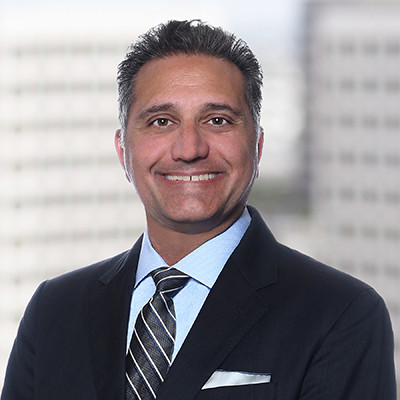 | Michael Yaghi Mike handles high-profile state attorneys general, FTC, and CFPB investigations by advising clients through these complex government inquiries. He assists clients through the entire life cycle of investigations, from regulatory enforcement through formal litigation. |
 | Samuel E. “Gene” Fishel Gene is a former regulator with two decades of experience who has overseen state privacy and cybersecurity regulation enforcement, led national, multistate attorneys general privacy investigations, and prosecuted computer crimes at the state and federal levels. He has served at the forefront of state attorney general and federal enforcement, and utilizes this experience to proficiently represent client interests. |
 | Jay Myers Jay assists clients in heavily regulated industries, including health care, energy, insurance, emerging industries, and data privacy. He provides both regulatory legal advice and government relations strategies. Jay’s past and current clients include Fortune 10 companies, startups, nonprofits, industry associations, and advocacy groups. Recognizing that state government matters are often complex and multifaceted, he utilizes regulatory guidance, government advocacy, or both in tandem to deliver tailored solutions for each client’s unique needs. |
 | Jessica Birdsong Jessica is an associate in the firm’s Regulatory Investigations, Strategy + Enforcement Practice Group. She received her J.D. from the University of Richmond School of Law, magna cum laude, where she served as associate articles editor of the Journal of Law & Technology. |
 | Blake R. Christopher Blake collaborates with clients on matters related to government contracting, investigations, and disputes. His senior-level government experience generates valuable insights and strategies for clients across a variety of industries. |
 | Nick Gouverneur Nick is an associate in the firm’s Regulatory Investigations, Strategy + Enforcement Practice Group. He received his J.D. from the University of Illinois College of Law, where he served as a member of the Journal of Law, Technology & Policy. |
 | Troy Homesley Troy is an accomplished litigator who has represented and defended clients across a wide range of complex, high-stakes disputes at both the trial and appellate levels. He has represented technology companies, business executives, law firms, investment funds, high-ranking federal officials, international non-profits, and asylum seekers. Troy draws on his broad litigation experience to advise clients before litigation arises, while claims are pending or threatened, and leading up to and through trial and appeals. |
 | Natalia Jacobo Natalia is an associate in the firm’s Regulatory Investigations, Strategy and Enforcement (RISE) practice, based on the West Coast. She routinely counsels clients on a variety of state and federal regulatory matters, with a particular emphasis on consumer protection and data privacy matters. |
 | Namrata Kang Namrata (Nam) is an associate in the firm’s Regulatory Investigations, Strategy + Enforcement (RISE) Practice Group, based in the Washington, D.C. office. She routinely advises clients on a wide variety of state and federal regulatory matters, with a particular emphasis on state consumer protection laws relating to consumer financial services and marketing and advertising. Nam’s experience transcends multiple industries, including financial services, telecommunications, media, and sports betting. |
 | Michael Lafleur Michael is an associate in the firm’s Regulatory Investigations, Strategy, and Enforcement Practice Group. Based out of the firm’s Boston office, Mike has deep experience in litigation, investigations, and other regulatory matters involving state-level regulators and state attorneys general. |
 | Lane Page Lane specializes in federal and state regulatory investigations and complex civil litigation. He focuses on representing financial institutions and other businesses, with a particular emphasis on consumer protection and fair lending issues. |
 | Dascher Pasco Dascher is an attorney within the Regulatory Investigations, Strategy, and Enforcement practice, based in the Richmond office. She joined our firm after working in personal injury and medical malpractice for a Virginia trial law firm. Dascher brings varied legal experience to the firm with strong litigation and regulatory strategy capabilities. |
 | Kyara Rivera Rivera Kyara is an associate in the firm’s Regulatory Investigations, Strategy + Enforcement Practice Group. She received her J.D. from the University of Richmond School of Law, cum laude, where she served as publications and online editor of the Public Interest Law Review. |
 | Trey Smith Trey focuses his practice on representing and advising regulated utilities before state public utility commissions. He routinely helps clients obtain certificates of public convenience and necessity for transmission infrastructure. In this role, Trey works with his clients’ subject-matter experts to manage administrative proceedings, including by preparing initial filings; responding to discovery requests; drafting rebuttal testimony; and litigating any disputed issues. |
 | Daniel Waltz Dan helps clients navigate all aspects highly regulated relationships between industry participants and federal, state and local governments. Whether engaging with regulators, negotiating transactions or representing clients in the courtroom, he delivers solutions that help his clients achieve their strategic goals. |
 | Cole White Cole is a member of the firm’s Regulatory Investigations, Strategy and Enforcement (RISE) group. He has a decade of experience working in the attorney general community, having joined the firm from the Wyoming Office of the Attorney General, where he was assistant attorney general. |
 | Stephanie Kozol Stephanie is Troutman Pepper Locke’s senior government relations manager in the state attorneys general department. |