

On September 29, 2025, California Governor Gavin Newsom signed Senate Bill 53, the Transparency in Frontier Artificial Intelligence Act, into law. The bill will go into effect on January 1, 2026. The act builds upon the recommendations found in the “California Report on Frontier AI Policy,” which was released to the public on June 17, 2025. This report detailed key principles to guide the legislation drafting process, including grounding AI policy in empirical research and providing greater transparency into AI systems. Given that California is home to 32 of the top 50 AI companies worldwide, the state dominates the AI industry. It is no surprise that California is the first state to create rules promoting safety, transparency, and incident reporting for frontier models. This new act is expected to set the stage for similar AI legislation across the U.S.
Frontier AI Models
The act applies to developers of frontier AI models, or any “foundation[al] [AI] model that was trained using a quantity of computing power greater than 10^26 integer or floating-point operations,” as defined by the act. This act is the first American legislation to use a minimum threshold of computing power, also called “compute,” to determine the level of AI systems’ advancement and the extent of risk associated with them.
While not all, most of the act’s provisions are intended to regulate large frontier developers, described as “a frontier developer that together with its affiliates collectively had annual gross revenues in excess of $500 million in the preceding calendar year.” Additionally, the AI systems regulated by the act are only the most advanced and powerful models, which use a great deal of computational resources. In practice, this means that only the largest AI labs will be subject to much of the act.
Purposes of the Act
The act is multifaceted and regulates frontier AI models in a variety of ways. Large frontier developers must provide a frontier AI framework that documents technical and organizational protocols to manage, assess, and mitigate catastrophic risk. One of the many statutory requirements of the plan is that each frontier AI developer must describe how the company complies with national standards, international standards, and industry-consensus best practices. These plans must be reviewed and updated as appropriate at least once per year.
New reporting mechanisms are an integral part of the act’s focus on promoting the safe use of such powerful frontier AI models. Before deploying a new or substantially modified model, all frontier developers, not just large ones, must publish a transparency report. This report must include the frontier developer’s website, communication mechanisms, release date, supported languages and output modalities, intended uses, usage restrictions, risk assessment results, including third-party involvement and compliance steps with the AI framework, and additional relevant information.
When a critical safety incident occurs, developers must promptly report it to the California Office of Emergency Services (COES) within 15 days of discovering the incident, or within 24 hours if the incident poses an imminent threat of death or serious injury. A critical safety incident is defined as (1) unauthorized access to, modification of, or exfiltration of, the model weights of a frontier model that results in death or bodily injury, (2) harm resulting from the materialization of a catastrophic risk, (3) loss of control of a frontier model causing death or bodily injury, or (4) when a frontier model deceptively bypasses its developer’s controls outside of testing, posing a significantly increased catastrophic risk.
COES is also responsible for creating a system for whistleblowers to report incidents where AI behavior could result in death, injury, or other catastrophic risks, ensuring accountability. Whistleblowers can enforce these protections through civil lawsuits or administrative actions, though relief is limited to injunctions and attorneys’ fees. Companies failing to comply with reporting or disclosure requirements may face civil penalties of up to $1 million per violation, enforced by the attorney general’s office. Companies must adjust their internal human resources policies to take the act’s whistleblower protections into account.
California is offering resources allowing researchers, government agencies, and startup businesses to use frontier AI models, ensuring access for those unable to develop such systems. CalCompute, a publicly owned computing cluster (or group of computers combining their power to function as one) established by the act within California’s Government Operations Agency (GOA), will provide this access. The GOA is due to submit a report to the Legislature by January 1, 2027, to inform the creation and operation of CalCompute. This report will analyze a wide range of topics, including “California’s current public, private, and nonprofit cloud computing platform infrastructure,” an “analysis of the cost to the state to build and maintain CalCompute and recommendations for potential funding sources,” and “[r]ecommendations for the parameters for use of CalCompute, including, but not limited to, a process for determining which users and projects will be supported by CalCompute.”
The act requires the California Department of Technology (CDOT) to update the law to ensure it adapts to the times. By 2027, and annually thereafter, CDOT will reassess some of the act’s definitions, an acknowledgement that terms like “frontier model” and “(large) frontier developer” may evolve with AI’s rapid progress. In making recommendations, CDOT is required to consider similar thresholds used in federal or international law and incorporate input from multiple stakeholders, technological advancements, and international standards. While CDOT has the authority to recommend updates, the Legislature must approve and adopt the updates. Additionally, the act allows for compliance with emerging federal standards on frontier AI models, ensuring alignment with national AI laws and avoiding redundancy.
Why It Matters
Frontier AI developers must understand the act’s requirements and incorporate any necessary changes to governance, risk assessment, and reporting practices. While the legislation primarily focuses on the largest models currently, even businesses that do not meet the threshold requirements should incorporate the obligations into their compliance programs moving forward. California previously set the stage for a national trend in legislation with the California Consumer Privacy Act. It would not be a surprise if the act serves as an inspiration for similar statutes regulating AI. As AI technology becomes more democratized, it is anticipated that the threshold for those companies subject to AI regulations, such as this one, will decrease as the industry expands.
It is important for companies to recognize at this stage that the transparency, safety, and accountability aspects of the act will require companies to continuously evaluate any potential risks associated with frontier AI usage. For example, if a risk arises, firms must have already-developed protocols for incident response, as the stringent deadlines for reporting critical safety incidents must be adhered to. Even companies that do not utilize frontier models must be aware of the act’s requirements and should build compliance programs with these obligations in mind.
Troutman Pepper Locke State Attorneys General Team
 |
Ashley Taylor – Co-leader and Firm Vice Chair Ashley is co-leader of the firm’s nationally ranked State Attorneys General practice, vice chair of the firm, and a partner in its Regulatory Investigations, Strategy + Enforcement (RISE) Practice Group. He helps his clients navigate the complexities involved with multistate attorneys general investigations and enforcement actions, federal agency actions, and accompanying litigation. |
 |
Clay Friedman – Co-leader Clay co-leads the firm’s State Attorneys General practice and is nationally ranked by Chambers USA for AG Government Relations and in Best Lawyers for Advertising Law. He has dedicated his entire career to state attorney general and federal work, serving for nearly a decade in a senior role and more than 25+ years in private practice. Clay focuses his practice on helping industry-leading companies mitigate the risks associated with state and federal regulatory investigations and associated litigation. |
 |
Chris Carlson Chris advises clients on regulatory, civil, and criminal investigations and litigation. With a background as an assistant attorney general, he provides practical guidance to clients with matters involving state attorneys general and federal regulatory agencies. |
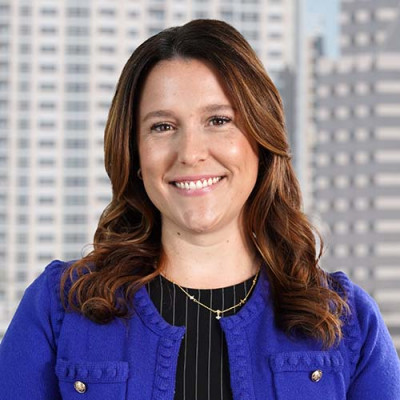 |
Lauren Fincher Lauren has vast experience handling state attorneys general investigations, navigating complex regulatory compliance matters, and providing strategic counsel in enforcement actions across various industries. She helps clients manage high-stakes regulatory matters and guides them through complex legal landscapes. |
 |
Stephen Piepgrass Stephen leads the firm’s Regulatory Investigations, Strategy + Enforcement (RISE) Practice Group, representing clients in single and multistate enforcement actions, including inquiries and investigations, as well as litigation involving state attorneys general and other state and federal governmental enforcement bodies. He has significant experience handling actions with federal agencies, including the CFPB and FTC, as well as single plaintiff and class action litigation for clients in highly regulated sectors such as financial services, health care, pharmaceutical, and education. |
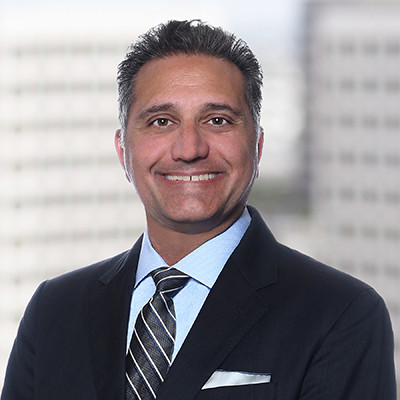 |
Michael Yaghi Mike handles high-profile state attorneys general, FTC, and CFPB investigations by advising clients through these complex government inquiries. He assists clients through the entire life cycle of investigations, from regulatory enforcement through formal litigation. |
 |
Matthew J. Berns Drawing on his experience in senior leadership roles in the New Jersey Attorney General’s and Governor’s Offices and as a trial attorney for the U.S. Department of Justice, Matt provides an insider’s perspective when guiding clients through complex government investigations, litigation, and other actions. |
 |
Samuel E. “Gene” Fishel Gene is a former regulator with two decades of experience who has overseen state privacy and cybersecurity regulation enforcement, led national, multistate attorneys general privacy investigations, and prosecuted computer crimes at the state and federal levels. He has served at the forefront of state attorney general and federal enforcement, and utilizes this experience to proficiently represent client interests. |
 |
Jeff Johnson Jeff helps clients navigate complex regulatory and litigation challenges with local, state, and federal authorities. His clients benefit from his decade of broad litigation experience, understanding of emerging state and federal regulatory issues, and strong relationships with attorneys general across the U.S. In addition to handling cases from trial through state or federal appeals, Jeff serves as amicus counsel in advancing legal rules to support his clients’ vital interests. |
 |
Jay Myers Jay assists clients in heavily regulated industries, including health care, energy, insurance, emerging industries, and data privacy. He provides both regulatory legal advice and government relations strategies. Jay’s past and current clients include Fortune 10 companies, startups, nonprofits, industry associations, and advocacy groups. Recognizing that state government matters are often complex and multifaceted, he utilizes regulatory guidance, government advocacy, or both in tandem to deliver tailored solutions for each client’s unique needs. |
 |
Zoe Schloss Zoe represents clients in litigation and government investigations. As former deputy attorney general for the Delaware Department of Justice, she is an experienced litigator who understands the enforcement priorities that impact her clients. Zoe works with individuals and corporate entities in highly regulated industries, including financial services, health care, and energy. |
 |
Jessica Birdsong Jessica is an associate in the firm’s Regulatory Investigations, Strategy + Enforcement Practice Group. She received her J.D. from the University of Richmond School of Law, magna cum laude, where she served as associate articles editor of the Journal of Law & Technology. |
 |
Nick Gouverneur Nick is an associate in the firm’s Regulatory Investigations, Strategy + Enforcement Practice Group. He received his J.D. from the University of Illinois College of Law, where he served as a member of the Journal of Law, Technology & Policy. |
 |
Troy Homesley Troy is an accomplished litigator who has represented and defended clients across a wide range of complex, high-stakes disputes at both the trial and appellate levels. He has represented technology companies, business executives, law firms, investment funds, high-ranking federal officials, international non-profits, and asylum seekers. Troy draws on his broad litigation experience to advise clients before litigation arises, while claims are pending or threatened, and leading up to and through trial and appeals. |
 |
Namrata Kang Namrata (Nam) is an associate in the firm’s Regulatory Investigations, Strategy + Enforcement (RISE) Practice Group, based in the Washington, D.C. office. She routinely advises clients on a wide variety of state and federal regulatory matters, with a particular emphasis on state consumer protection laws relating to consumer financial services and marketing and advertising. Nam’s experience transcends multiple industries, including financial services, telecommunications, media, and sports betting. |
 |
Michael Lafleur Michael is an associate in the firm’s Regulatory Investigations, Strategy, and Enforcement Practice Group. Based out of the firm’s Boston office, Mike has deep experience in litigation, investigations, and other regulatory matters involving state-level regulators and state attorneys general. |
 |
Philip Nickerson Philip represents clients in sectors such as financial, tech, real estate, and energy in a range of litigation matters. He is experienced in matters involving trade secrets, government investigations, commercial contracts, construction and product defect. |
 |
Lane Page Lane specializes in federal and state regulatory investigations and complex civil litigation. He focuses on representing financial institutions and other businesses, with a particular emphasis on consumer protection and fair lending issues. |
 |
Dascher Pasco Dascher is an attorney within the Regulatory Investigations, Strategy, and Enforcement practice, based in the Richmond office. She joined our firm after working in personal injury and medical malpractice for a Virginia trial law firm. Dascher brings varied legal experience to the firm with strong litigation and regulatory strategy capabilities. |
 |
Kyara Rivera Rivera Kyara is an associate in the firm’s Regulatory Investigations, Strategy + Enforcement Practice Group. She received her J.D. from the University of Richmond School of Law, cum laude, where she served as publications and online editor of the Public Interest Law Review. |
 |
Timothy Shyu Timothy is an associate in the firm’s Regulatory Investigations, Strategy + Enforcement Practice Group. |
 |
Trey Smith Trey focuses his practice on representing and advising regulated utilities before state public utility commissions. He routinely helps clients obtain certificates of public convenience and necessity for transmission infrastructure. In this role, Trey works with his clients’ subject-matter experts to manage administrative proceedings, including by preparing initial filings; responding to discovery requests; drafting rebuttal testimony; and litigating any disputed issues. |
 |
Daniel Waltz Dan helps clients navigate all aspects highly regulated relationships between industry participants and federal, state and local governments. Whether engaging with regulators, negotiating transactions or representing clients in the courtroom, he delivers solutions that help his clients achieve their strategic goals. |
 |
Cole White Cole is a member of the firm’s Regulatory Investigations, Strategy and Enforcement (RISE) group. He has a decade of experience working in the attorney general community, having joined the firm from the Wyoming Office of the Attorney General, where he was assistant attorney general. |
|
Zoe Schloss Zoe represents clients in litigation and government investigations. As former deputy attorney general for the Delaware Department of Justice, she is an experienced litigator who understands the enforcement priorities that impact her clients. Zoe works with individuals and corporate entities in highly regulated industries, including financial services, health care, and energy. |
 |
Stephanie Kozol Stephanie is Troutman Pepper Locke’s senior government relations manager in the state attorneys general department. |