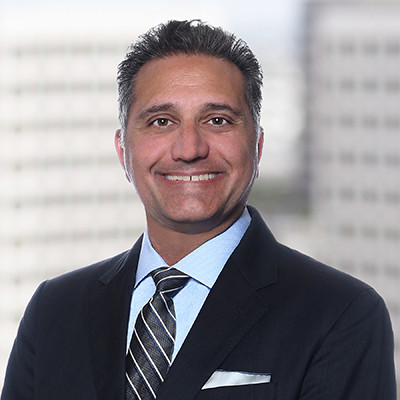
Photo of Michael Yaghi

Michael is a partner in the firm’s State Attorneys General and Regulatory Investigations, Strategy + Enforcement (RISE) Practice Groups, nationwide teams that advise clients on consumer protection enforcement matters and other regulatory issues. Based in the firm’s Orange County office, Michael represents high-profile clients in regulatory enforcement investigations involving all facets of their business, including but not limited to, advertising and sales practices, monthly membership programs, auto renewal programs, telemarketing and telephone solicitations, door-to-door sales practices, and endorsements. Having begun his career as a commercial litigator, he also supports clients throughout litigation, should an investigation move in that direction.

On August 7, the U.S. Department of Treasury hosted a virtual briefing to discuss the steps that the Biden-Harris administration is taking to address perceived unfair and deceptive practices in the consumer solar energy industry. Deputy Secretary of Treasury Wally Adeyemo, along with Federal Trade Commission (FTC) Chair Lina Khan and Consumer Financial Protection Bureau (CFPB) Director Rohit Chopra, announced a new interagency consumer solar industry initiative directed at both sales and financing of residential systems. Each made statements about the unique effort to root out anti-competitive and sometimes-fraudulent activity by a handful of “bad actors” who are taking advantage of the burgeoning industry. The presenters also noted that they will be coordinating with state attorneys general (AG) and state financial regulators.

Published in Law360 on July 16, 2024. © Copyright 2024, Portfolio Media, Inc., publisher of Law360. Reprinted here with permission.

Gone are the days when state attorneys general leave antitrust enforcement to their federal counterparts at the Federal Trade Commission or the U.S. Department of Justice Antitrust Division.

State attorneys general have become considerably more active in the antitrust space over the past several years, and there seems to be no sign of slowing down.

BACKGROUND

The number of private equity (PE) funds and the amount of capital deployed through private equity investing have grown dramatically over the last several decades. Some PE firms are buyout firms — they purchase controlling equity positions in (usually privately held) operating companies — while other PE firms make minority investments, either alongside other PE firms or on their own. In both cases, PE firms are typically granted significant controls and protections by the companies in which they invest.

On May 5, 2023, New York Attorney General (AG) Letitia James introduced legislation to regulate businesses engaged in digital asset-related activities “from or within the State of New York.” Titled the “Crypto Regulation, Protection, Transparency, and Oversight Act” (the CRPTO Act or the Act), AG James has called the proposal “the strongest and most comprehensive set of regulations on cryptocurrency in the nation.”

The rapid advancement of generative artificial intelligence (AI) raises important competition concerns, prompting the Federal Trade Commission (FTC) to analyze potential risks and propose solutions. In its recent June 29 blog post, the FTC highlighted the need for proactive measures to address competition issues in the evolving generative AI industry. This article analyzes the FTC’s blog post, summarizing its key points and offering insights into the potential implications for stakeholders.

Financial services companies are using AI to assist with many business processes, including underwriting decisions, consumer credit approval, servicing and collections, loss mitigation programs, customer interaction on websites and mobile apps via chatbots, and in detecting fraud. In this fourth episode, Stephen Piepgrass and colleagues Chris Willis and Michael Yaghi examine the use and impact of AI in the financial services industry. They discuss the potential risks financial services companies may face with increased reliance on AI, as well as the increased focus on AI by various regulators and state attorneys general.

AI continues to capture the headlines. One recent headline noted that ChatGPT passed the medical boards. In this third episode, Stephen Piepgrass and colleagues Michael Yaghi and Barry Boise discuss the potential risks health care companies may face with increased reliance on AI, as well as the increased focus on AI by various regulators and state attorneys general, particularly in the health care space.

State authorities increasingly embrace role as consumer watchdogs


A version of this post was published in Corporate Compliance Insights on April 5, 2023. © Copyright 2023, Corporate Compliance Insights. Reprinted here with permission.


State attorneys general are increasingly taking offensive positions, bringing lawsuits against companies and executives they accuse of bad conduct. A team of attorneys from Troutman Pepper, led by Clayton Friedman and Trey Smith, explore recent cases and how executives can strengthen the corporate veil.