While active in the space for several years, state attorneys general have taken increasingly aggressive action over the last year to regulate crypto-based products and services and prosecute those abusing this otherwise exciting innovation. In a recent article, we summarize the basics of crypto, as well as recent actions by state attorneys general involving crypto-based

On April 27, the Bureau of Consumer Financial Protection (CFPB) issued a final rule to delay the mandatory compliance date for the General QM Final Rule until October 1, 2022. The CFPB stated that it issued the rule “to help ensure access to responsible, affordable mortgage credit and to preserve flexibility for consumers affected by

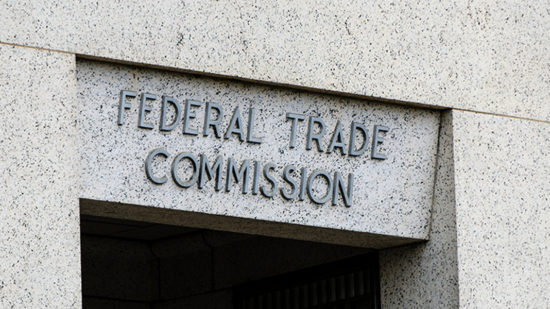
On May 18, the Federal Trade Commission’s (FTC) Acting chairwoman told Congress that the U.S. Chamber of Commerce’s opposition to legislation that would authorize the FTC to obtain monetary remedies under Section 13(b) of the FTC Act was based on “numerous misstatements and faulty premises.” Chairwoman Slaughter’s comments highlight the FTC’s concern that the Supreme

The Second Circuit recently issued a decision in McMorris v. Carlos Lopez & Associates, LLC, No. 19-4310, 2021 U.S. App. LEXIS 12328 (2nd Cir. Apr. 26, 2021), which clarifies the circumstances under which plaintiffs alleging an increased risk of future identity theft or fraud due to the exposure of their personal data can establish Article III standing. Notable for being the first Second Circuit decision to address privacy-related standing questions that had arguably created a circuit split, the court endorsed a three-factor framework that would reject a finding of Article III standing absent sufficient evidence of “increased risk” of future fraud or identity theft, but which left open the possibility that standing could still be established where plaintiffs allege a sufficient likelihood of misuse of their personal data.

On May 12, the Senate Commerce Committee voted overwhelmingly to move forward with Lina Khan’s nomination to the Federal Trade Commission (FTC), which suggest that Khan is likely to be confirmed as an FTC commissioner by the full Senate. Khan has been a critic of big tech and advocate of competitive markets, as we previously discussed here.

On April 20, members of the Federal Trade Commission (FTC) testified before the Senate Commerce Committee to update lawmakers of their efforts to curtail scams and other fraudulent consumer abuses related to the novel coronavirus (COVID-19). In addition to highlighting the abuses consumers have faced during COVID-19, the FTC reiterated its call for Congress to pass legislation reaffirming that the agency has authority to prohibit unlawful conduct and seek monetary relief for consumers who have lost money from illegal conduct. The FTC has historically relied on Section 13(b) of the Federal Trade Commission Act to prohibit illegal conduct and secure monetary relief for consumers, but the Supreme Court ruled two days after this testimony that the agency does not have authority under the Federal Trade Commission Act – Section 13(b) to seek, nor a court to award, equitable monetary relief, such as restitution or disgorgement.

The Federal Trade Commission (FTC) is acting swiftly to restore its authority to obtain consumer redress under Section 13(b) of the FTC Act after the Supreme Court’s recent decision in AMG Capital Management, LLC v. FTC, discussed in our blog post here, rejecting the agency’s longstanding position that Section 13(b) authorizes monetary remedies.

A federal court in Michigan recently ruled that out-of-state residents have standing to sue under the Michigan Personal Privacy Protection Act (PPPA). In Lin v. Crain Communications, Inc., Case No. 2:19-cv-11889 (E.D. Mich., June 25, 2019), Gary Lin, a Virginia resident, filed a putative class-action lawsuit against Crain Communications, Inc. (Crain), a Michigan-based publishing