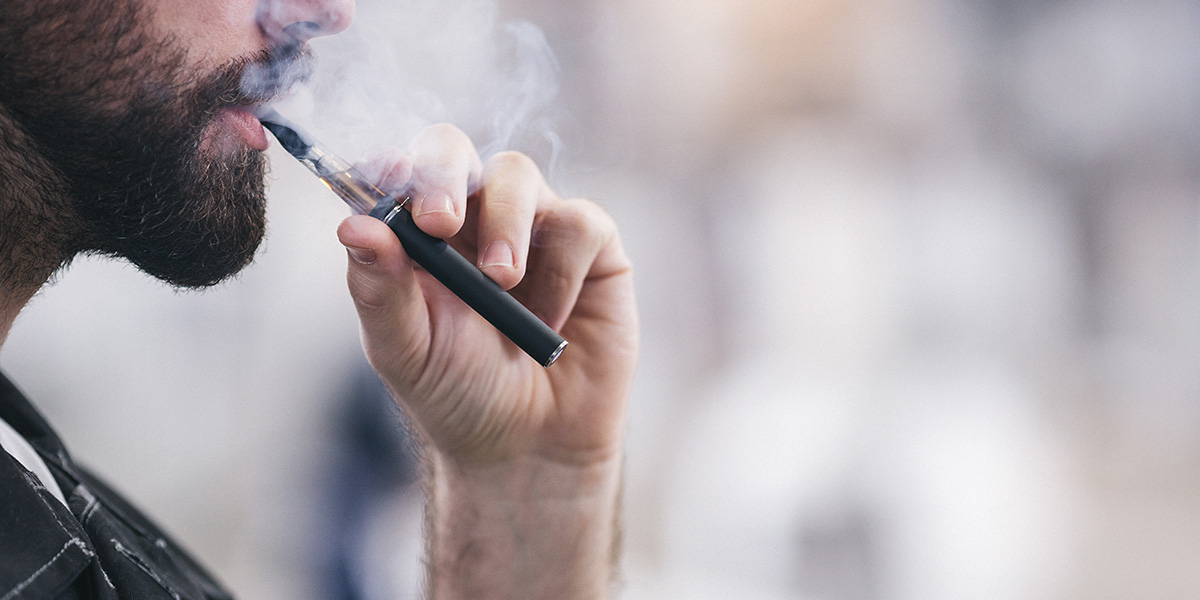
In the first major enforcement action involving the importation of illegal tobacco products by the new administration, and on the heels of the appointment of the new acting director of the U.S. Food and Drug Administration (FDA) Center for Tobacco Products, FDA and U.S. Customs and Border Protection (CBP) seized illegal e-cigarettes valued at nearly $34 million. This operation underscores the ongoing efforts by federal agencies to combat the influx of unauthorized tobacco products into the U.S.

Compliance Services Colorado, Inc. (CSC) and Colorado Compliance Services, LLC (CCS) (collectively, the parties) recently entered into an Assurance of Discontinuance (AOD) with Colorado Attorney General (AG) Phil Weiser to resolve allegations that, beginning in August 2023, CSC sent deceptive solicitations to businesses in violation of the Colorado Consumer Protection Act.

The Massachusetts attorney general’s (AG) office has finalized new consumer protection regulations aimed at eliminating hidden “junk fees” and improving price transparency. Set to take effect on September 2, the regulations apply across a broad range of industries and are intended to curb alleged practices that obscure the actual cost of goods and services.

We previously wrote about this case last January, here and here, when Iowans for Alternatives to Smoking & Tobacco, Inc., Global Source Distribution, LLC, and others filed a complaint and motion for a preliminary injunction in federal district court against the Iowa Department of Revenue (the Department), challenging Iowa House File 2677 (HF 2677), a law imposing certification and directory requirements on vapor products sold in Iowa. On May 2, the court granted plaintiffs’ motion for preliminary injunction and enjoined the Department from implementing and enforcing HF 2677’s vapor product directory provisions. The court held that the Department could, however, continue to enforce the provisions of HF 2677 requiring nonresident vapor product manufacturers not registered to do business in the state as a foreign corporation or business entity to appoint and continually engage an agent for service of process. The parties have a status conference before the court scheduled for May 29.

On April 16, Illinois Attorney General Kwame Raoul announced a $12 million settlement through a consent decree with Direct Energy Services LLC (Direct Energy). Direct Energy is an alternative retail electric supplier (ARES) and an alternative retail gas supplier (ARGS). Companies like Direct Energy are certified by the Illinois Commerce Commission to sell electricity and gas to residential consumers. This settlement arises from Raoul’s allegations that Direct Energy misled consumers, causing them to pay substantially more for energy than they would have if they had remained with their default public utility company. Specifically, Raoul alleged that Direct Energy falsely promised lower rates, while actually charging energy rates more than 230% higher than the public utility.

New York Attorney General (AG) Letitia James recently announced her support for legislation that would significantly broaden the state’s consumer protection statute to prohibit not just deceptive acts, but also unfair and abusive business practices. The proposed Fostering Affordability and Integrity through Reasonable (FAIR) Business Practices Act, an idea long backed by leaders of the Biden-era Federal Trade Commission and Consumer Financial Protection Bureau, has been introduced in both the New York State Senate and Assembly.

Alaska’s Department of Law’s Consumer Protection Unit recently announced it obtained a Superior Court order issuing a $250,000 civil penalty against B. Merry Studio, which the state alleged to have marketed products as being made in Alaska, when the products were manufactured in the Philippines. The products at issue include knives, figurines, and animal carvings. While some of the products included raw materials sourced from Alaska, the products were assembled in the Philippines. When B. Merry Studio shipped the products to Alaska, their finishings included “Made in Philippines” stickers. The company allegedly replaced these stickers with labels that stated, “Alaskan Made” and “Made in Alaska.”