What Happened

States including Texas, Utah, Louisiana, and California have begun shifting children’s online safety obligations from individual apps and websites to app stores and operating systems. These laws generally require centralized age checks, parental consent tracking, and tighter coordination between app stores and developers, and they are already generating litigation risk, including a pending First Amendment challenge to the Texas statute. For a deeper overview of these state approaches and the emerging legal challenges, see this article.
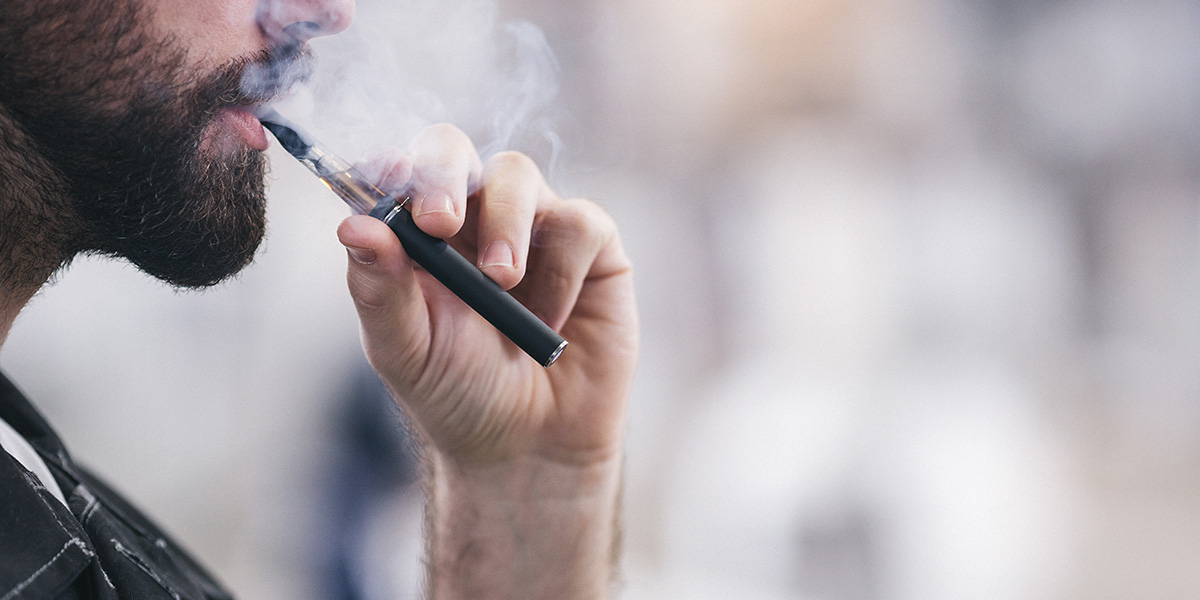
The North Carolina Court of Appeals recently issued a decision strengthening the “sealed container” defense available to non‑manufacturing sellers in products liability cases. In Weaver v. AMV Holdings LLC, the court found in favor of a vape retailer and distributor after a lithium‑ion battery malfunctioned in a customer’s pocket, causing serious burns. For retailers and distributors — particularly those dealing with lithium‑ion batteries — this decision underscores the continued viability of sealed container defenses.

California recently finalized changes to its Proposition 65 (Prop 65) warning rules that included significant changes to short-form warning statements for product labels. These changes directly affect nicotine‑containing products — including e‑cigarettes, e‑liquids, oral nicotine products, and other consumer goods that can expose consumers to nicotine.

The Florida attorney general (AG) recently initiated legal proceedings against several Florida smoke shops, alleging violations of state law related to the sale and marketing of illegal nicotine products, particularly vapor products, to minors. The action targets multiple businesses, including 27 Smoke Shop Inc., A&A Smoke Shop LLC, Alami 9 LLC, Alami 10 LLC, Epic Novelty LLC, and Fuego Smoke Shop LLC. The complaint, filed in the Fifth Judicial Circuit, accuses these retailers of selling, shipping, or failing to remove from their inventory nicotine products that are classified as illegal contraband under Florida law, with a particular focus on products marketed to children.

On his last day in office, New Jersey Attorney General (AG) Matt Platkin announced a consent order resolving a consumer fraud investigation into Skims Body, Inc. for charging consumers in New Jersey sales tax on items that are exempt under state law. Founded by Kim Kardashian, Skims is primarily an online retailer of apparel. The company agreed to pay $200,000 in civil penalties and to comply with the consent order’s injunctive terms.    

On January 6, Minnesota Attorney General (AG) Keith Ellison filed a lawsuit against the Minnesota nonprofit corporation Act for Cause (AFC) and its president, Rajesh Mehta. While the stated mission of AFC was to help needy individuals with securing employment and housing, the lawsuit alleges that Mehta used the charity for various self-dealing purposes.

On December 19, 2025, New York Governor Kathy Hochul signed into law the Fostering Affordability and Integrity through Reasonable (FAIR) Business Practices Act. The FAIR Act, which was proposed by Attorney General (AG) Tish James, represents the first major update to the state’s primary consumer protection law in 45 years and significantly broadens the statute’s reach.

On November 21, Delaware Attorney General Kathy Jennings’s Investor Protection Unit (IPU) announced a $995,180 penalty against Kovack Advisors, Inc. (Kovack) for a series of violations of the Delaware Securities Act. The enforcement action — resolved through a consent order — highlights the IPU’s growing focus on registration accuracy, supervisory systems, and books-and-records compliance for investment advisers operating in the state.

The Texas attorney general (AG) announced a $41.5 million settlement with Pfizer and Tris Pharma related to allegations that the companies provided adulterated pharmaceutical products to children and manipulated testing to secure Medicaid reimbursement in violation of the Texas Health Care Program Fraud Prevention Act (THFPA).

The National Collegiate Athletic Association (NCAA) has abruptly reversed a recently approved rule change that would have permitted college athletes and athletic department staff to bet on professional sports. Under a rarely used override process, more than two-thirds of Division I member schools voted within a 30-day window last month to rescind the proposal. The threshold was reached on November 21, nullifying the rule change before it could take effect. As a result, the longstanding ban on sports wagering by NCAA student-athletes and staff remains in place across all three NCAA divisions. However, even if the rule had been implemented, college athletes and athletic department staff would still have been barred from betting on any NCAA contests, as the rescinded change only concerned wagering on professional sports. The vote to revoke the new rule underscores the NCAA membership’s cautious stance amid an evolving sports betting landscape.