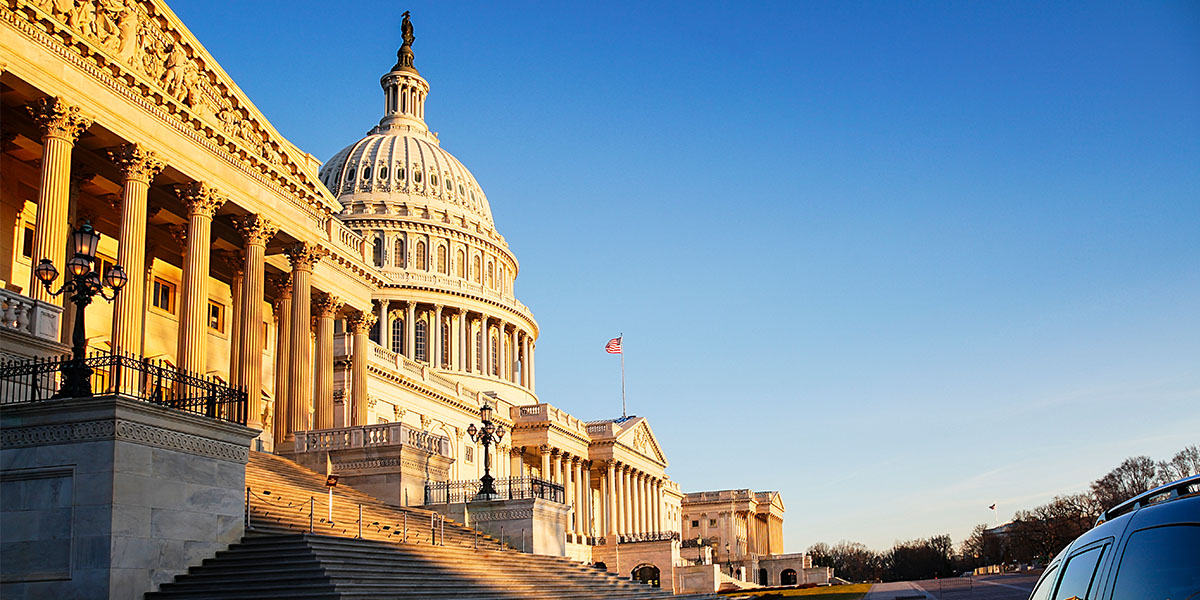
In a pair of recent submissions to the Federal Communications Commission (FCC), a bipartisan coalition including more than 20 state attorneys general (AG) opposed action by the FCC to preempt state and local laws relating to artificial intelligence (AI). The coalition’s comments reflect persistent concerns among AGs about how businesses use AI when interacting with their residents, even as some federal policymakers support limiting states’ ability to address those concerns.

We recently covered this case here, in which a small manufacturer and retailer sued the Virginia attorney general (AG) and tax commissioner in the U.S. District Court for the Eastern District of Virginia, seeking to enjoin enforcement of the vapor product directory law. See Nova Distro, Inc., et al. v. Miyares et al., No. 3:25-cv-857 (E.D.V.A.). There, we also noted another ongoing case challenging a similar law in North Carolina, for which oral argument is scheduled before the U.S. Court of Appeals for the Fourth Circuit on January 29, 2026. See Vapor Technology Association, et al. v. Wooten et al., No. 25-1745 (4th Cir.).

Popular prediction markets platforms recently announced that they have formed the Coalition for Prediction Markets. According to the coalition’s website, it aims to unite exchanges, brokers, and advocates to expand consumer access to safe, transparent, and integrity-driven prediction markets in the U.S. The coalition contends that prediction markets currently operate under a federal framework, but that framework is being threatened by state regulators “seeking to block consumer access and extend their own authority.” This messaging signals that prediction market operators are prepared to vigorously oppose state regulation in an effort to preserve exclusive federal oversight.

Register Here

Monday, November 10 | 1:00–3:10 p.m. ET

Lu Reyes and John West, members of Troutman Pepper Locke’s Regulatory Investigations, Strategy + Enforcement practice, will participate in an upcoming CLE webinar with myLawCLE. They will discuss the difference in approaches between state attorney general (AG) investigations and federal enforcement actions.

Summary

  • The False Claims Act (FCA) qui tam provision allows private citizens (relators) to sue on the government’s behalf for FCA violations and receive a portion of any settlement or award.
  • The FCA qui tam provision has evolved since its inception, and recent U.S. Supreme Court cases signal a move to rein in the power of relators.
  • Funding sources, claim truthfulness, and companies’ subjective understanding will be critical issues in FCA enforcement efforts against diversity, equity, and inclusion (DEI) programs.
  • The current Court hasn’t ruled on the constitutionality of the FCA qui tam provision because no case before it directly raised the issue, but it may soon have the chance.

Register Here

Wednesday, October 29 | 1:00 – 3:10 p.m. ET

Mike Yaghi and Lane Page, members of Troutman Pepper Locke’s State Attorneys General practice, along with Stefanie Jackman and Caleb Rosenberg from the Consumer Financial Services practice, will participate in an upcoming CLE webinar with myLawCLE. They will analyze the evolving roles and enforcement priorities of federal and state regulatory agencies, focusing on their impact on consumer financial services.

In May, we wrote about the Trump administration’s first major enforcement action involving the importation of unauthorized e-cigarettes, in which the U.S. Food and Drug Administration (FDA) and U.S. Customs and Border Protection (CBP) seized products valued at nearly $34 million. FDA and CBP have once again seized unauthorized e-cigarettes in Chicago, but this time the estimated retail value was $86.5 million — the largest seizure of its kind. This enforcement action is consistent with a statement on FDA’s website: “[e]nforcing against unauthorized ENDS products, including unauthorized products popular with youth, are [sic] among our highest enforcement priorities.” FDA maintains that decisions about whether to take enforcement action will continue to be made on a case-by-case basis after considering youth use and other risk factors.

Register Here
Thursday, September 25 • 1:00 – 3:10 p.m. ET

Sadia Mirza, co-leader of Troutman Pepper Locke’s Incidents + Investigations practice, Privacy + Cyber Partner Timothy St. George, and Regulatory Investigations, Strategy + Enforcement Counsel Gene Fishel, will participate in an upcoming CLE with myLawCLE to examine the nuances of navigating cybersecurity breaches.

On August 19, the U.S. Department of Justice (DOJ) announced that Allied Stone Inc. (Allied Stone) and its president, Jia “Jerry” Lim, agreed to pay $12.4 million in settlement to resolve allegations that the company violated the False Claims Act (FCA) by evading, or conspiring to evade, antidumping and countervailing duties owed on quartz surface products imported from China. Allied Stone is a Dallas-based countertop and cabinetry supplier. According to the DOJ, Allied Stone misrepresented Chinese quartz surface products as other merchandise subject to lesser duties to avoid the applicable antidumping and countervailing duties. The company also allegedly failed to declare and pay, and failed to ensure that others were declaring and paying, applicable duties owed to the U.S. on entries of its Chinese quartz surface products.