On October 13, Vermont Attorney General (AG) Charity R. Clark announced a settlement with Angi, Inc., (Angi), resolving allegations related to misleading marketing practices.


On October 13, Vermont Attorney General (AG) Charity R. Clark announced a settlement with Angi, Inc., (Angi), resolving allegations related to misleading marketing practices.
This article was originally published on Law360 and is republished here with permission as it originally appeared on October 29, 2025.
This article is part of a regular column in which each installment features observations on one state’s attorney general enforcement news and trends, and the compliance implications.
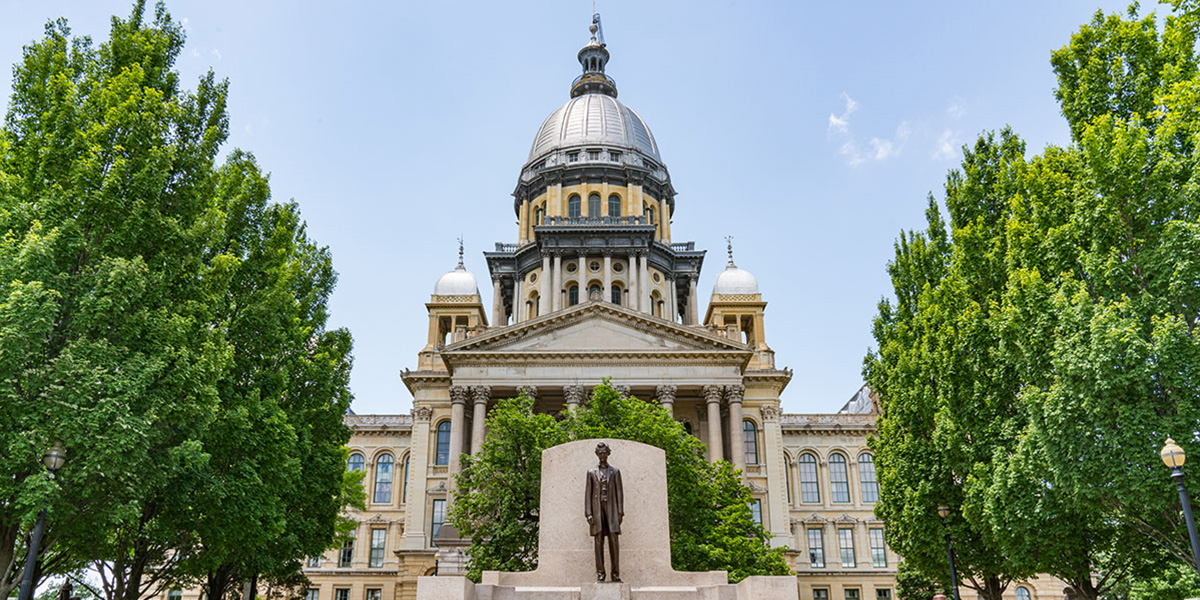
Since beginning his tenure in 2019, Illinois Attorney General Kwame Raoul has strategically positioned himself as a leading figure among Democratic state attorneys general.

Troutman Pepper Locke is proud to sponsor the Government Investigations & Civil Litigation Institute’s 11th Annual Meeting in Santa Ana Pueblo, New Mexico. Ashley Taylor will be moderating the “Navigating State Jurisdictional Waters: State Attorneys General and Their Reach” session, Ghillaine Reid will be a panelist on the “AI Ethics: Guardrails and Grey Areas in
Monday, November 10 | 1:00–3:10 p.m. ET
Lu Reyes and John West, members of Troutman Pepper Locke’s Regulatory Investigations, Strategy + Enforcement practice, will participate in an upcoming CLE webinar with myLawCLE. They will discuss the difference in approaches between state attorney general (AG) investigations and federal enforcement actions.

On September 9, 2025, the Court of Appeal of the State of California upheld California Attorney General (AG) Rob Bonta’s trial-court victory against a business and its owner for violations of California’s unfair competition law (UCL) based on allegations of the illegal sale of credit insurance, which largely targeted the business’s Latino immigrant customer base.

On September 18, 2025, the New Jersey Department of Labor and Workforce Development (NJDOL) and the Office of the New Jersey Attorney General (AG) announced that Lyft had paid $19,435,087.06 for allegedly misclassifying its employees as independent contractors.

On September 22, a group of 28 state AGs led by Iowa filed an amicus brief in Vapor Technology Association v. Wooten in support of North Carolina’s state directory law that prohibits the sale of electronic nicotine delivery system (ENDS) products or e-cigarettes that lack Food and Drug Administration (FDA) marketing authorization. According to the brief, 15 states have already enacted laws similar to North Carolina’s ENDS directory law, and another 25 states are considering such legislation.
On October 10, 2025, Illinois Attorney General (AG) Kwame Raoul filed a lawsuit on behalf of Ann Gillespie, director of the Illinois Department of Insurance (the Department), against four different entities, all within the State Farm corporate umbrella. This lawsuit arises from State Farm’s alleged refusal to comply with financial examination warrants issued by Director Gillespie, which aim to force State Farm to disclose information about the policies it writes and the premiums it charges. As insurance regulation is a creature of state law, the Department’s director oversees the enforcement and execution of all insurance laws in Illinois. Further, AG Raoul has authority to bring lawsuits on behalf of other Illinois state agencies.

On September 26, 2025, Minnesota Attorney General (AG) Keith Ellison announced a $800,000 settlement with Shipt, Inc. (Shipt). The settlement resolves allegations that the company was misclassifying its workers (referred to as “Shoppers”) as independent contractors instead of employees.

On September 29, 2025, California Governor Gavin Newsom signed Senate Bill 53, the Transparency in Frontier Artificial Intelligence Act, into law. The bill will go into effect on January 1, 2026. The act builds upon the recommendations found in the “California Report on Frontier AI Policy,” which was released to the public on June 17, 2025. This report detailed key principles to guide the legislation drafting process, including grounding AI policy in empirical research and providing greater transparency into AI systems. Given that California is home to 32 of the top 50 AI companies worldwide, the state dominates the AI industry. It is no surprise that California is the first state to create rules promoting safety, transparency, and incident reporting for frontier models. This new act is expected to set the stage for similar AI legislation across the U.S.