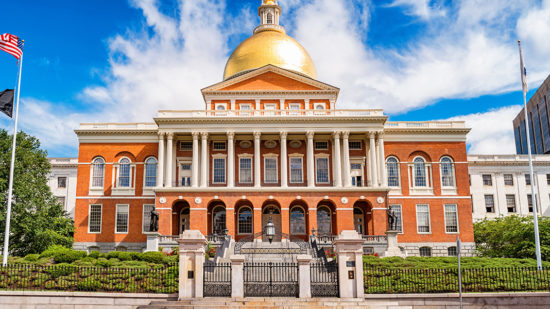
Massachusetts Attorney General (AG) Andrea Joy Campbell announced Massachusetts’ new consumer protection regulations prohibiting “junk fees” and providing consumers with greater transparency regarding trial and subscription offers, prohibiting unfair marketing tactics that obscure the true cost of a product or service. The regulations are intended to help consumers understand the total cost of products and services at the outset of a transaction, avoid fees, and make it easier to cancel unwanted costs associated with trial and subscription offers.

The New York Attorney General’s (AG) Office announced a $16.75 million settlement with DoorDash, the prominent delivery platform. The settlement relates to claims that DoorDash misled both consumers and delivery workers (Dashers) regarding the handling of tips. Specifically, AG Letitia James alleged that DoorDash employed a guaranteed pay model that was supposed to ensure that delivery workers knew their pay upfront. However, DoorDash allegedly used the model to redirect customer tips to subsidize the wages the company had guaranteed to the Dashers. Instead of giving Dashers the full tips as intended, the tips were used to reduce DoorDash’s payment obligations that were needed to satisfy the guaranteed payment amount.

Last week, in Tennessee v. EEOC, the Eighth Circuit reversed a district court’s decision and reinstated a lawsuit by 17 states (led by the Tennessee and Arkansas attorneys general (AGs)), holding that these states have standing to sue the Equal Employment Opportunity Commission (EEOC) over its regulations implementing the Pregnant­ Workers Fairness Act, 42 U.S.C. § 2000gg. This decision deserves mention because the court seemingly made it easier to demonstrate standing by finding that the “realities facing” regulated parties can demonstrate a concrete injury even without a threat of enforcement.

Our colleagues recently wrote about 14 memoranda from the new U.S. Attorney General (AG) Pam Bondi to Department of Justice (DOJ) employees framing the DOJ’s current policies and enforcement priorities. In a memorandum addressing DOJ’s general charging, plea bargaining, and sentencing policy, the AG stated the following: “To free resources to address more pressing priorities, the Bureau of Alcohol, Tobacco, Firearms, and Explosives (ATF) shall shift resources from its Alcohol and Tobacco Enforcement Programs to focus on matters relating to the other priorities set forth herein. No resources shall be diverted from the ATF’s regulatory responsibilities, such as federal firearms licenses and background checks.”

A coalition of industry associations and 22 state attorneys general (AGs), led by West Virginia AG JB McCuskey, filed a lawsuit against the State of New York in the U.S. District Court for the Northern District of New York challenging the validity of the state’s recently enacted Climate Change Superfund Act. The complaint asserts that the act’s retroactive imposition of multibillion-dollar fines on fossil fuel companies is both preempted by federal law and violates several bedrock constitutional principles.

On February 4, the Office of the Minnesota Attorney General (AG) released its second Report on Emerging Technology and Its Effect on Youth Well-Being, outlining the effects young Minnesota residents allegedly experience from using social media and artificial intelligence (AI). The report highlights alleged adverse effects that technology platforms have on minors and claims that specific design choices exacerbate these issues.

In this episode of Regulatory Oversight, Clay Friedman, co-leader of the firm’s State Attorneys General (AGs) practice, welcomes back Brian Kane, executive director of the National Association of Attorneys General (NAAG). They discuss the significant transitions and reforms at NAAG over the past two years, including the implementation of a bipartisan leadership structure and a comprehensive management review.

RICHMOND – Ashley L. Taylor, Jr., co-leader of Troutman Pepper Locke’s nationally ranked State Attorneys General Practice, was named to Virginia Lawyers Weekly’s “Go To Lawyers” for business litigation. The program recognizes the top lawyers across the commonwealth in a given practice area based on nominations and an independent selection process.

The Virginia General Assembly has once again advanced legislation to establish a regulated market for recreational marijuana sales. Virginia is unique in that it allows personal possession of cannabis but bans retail sales outside of medical marijuana dispensaries. The legislation, HB 2485 sponsored by Delegate Paul Krizek, D-Fairfax County, and SB970 by Senator Aaron Rouse, D-Virginia Beach, passed the Democratic-controlled legislature on a party-line vote (53-46 in the House and 21-19 in the Senate). The bills now move on to Virginia’s Governor Glenn Youngkin.

In this special joint edition of the Consumer Finance Podcast and the Regulatory Oversight Podcast, host Chris Willis is joined by colleagues Stephen Piepgrass, James Kim, Jesse Silverman, and Lane Page to discuss the ongoing changes at the Consumer Financial Protection Bureau (CFPB) and predict how state regulators and legislatures will react to fill the void. This episode explores the anticipated responses from state attorneys general, financial service regulators, and legislatures, and offers strategic insights for industry players to navigate this complex regulatory environment. Tune in to understand the proactive measures your organization can take to stay compliant and ahead of potential state enforcement actions.